
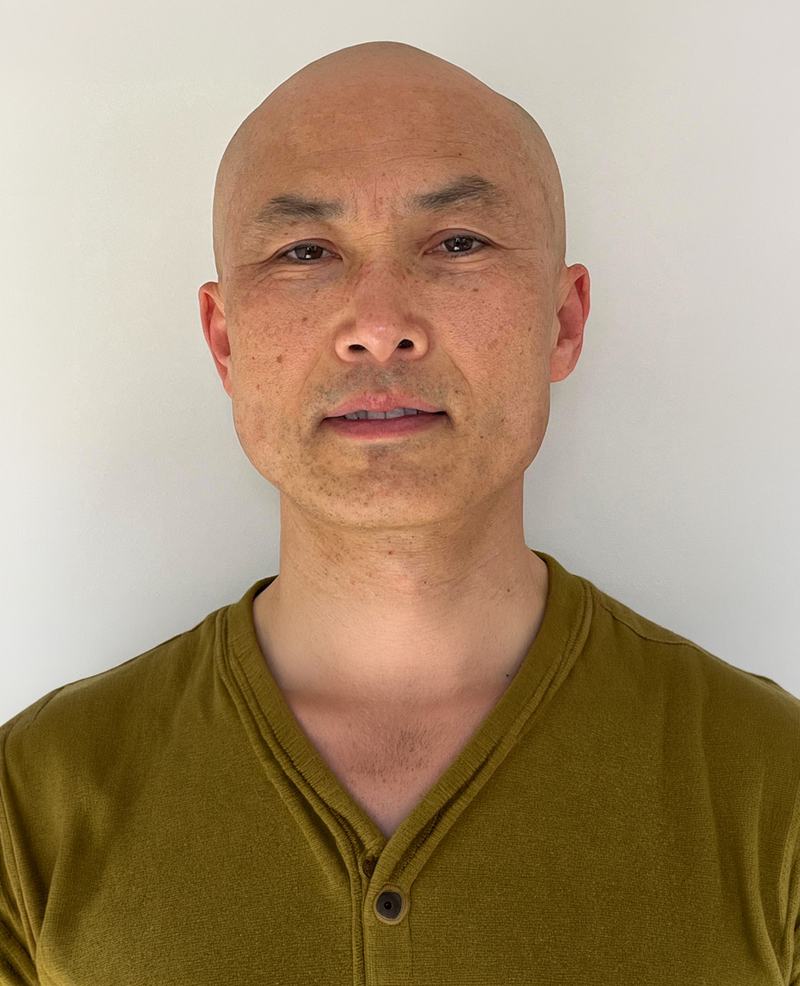
Associate Vice President of the Peptide Therapeutics group within BioTDR
Eli Lilly and Company, United States
Hongchang Qu is a peptide chemist at Eli Lilly and Company, where the molecules he helps design have moved from idea to clinical proof of concept in metabolic disease. The problem that runs through his work is less about making a peptide active than about making it behave: extending how long it survives in the body, and tuning it to engage one receptor among a family of close relatives.
Much of his recent work sits in the incretin field, where agonists of the GLP-1, GIP, and glucagon receptors have reshaped the treatment of diabetes and obesity. Qu is a co-inventor on the composition-of-matter patents behind retatrutide, Lilly's triple GIP/GLP-1/glucagon receptor agonist, and a co-author on the study tracing that molecule from discovery to clinical proof of concept. He presented the story at the 2023 American Peptide Symposium.
He has since contributed to a selective GIP receptor agonist and, more recently, to eloralintide, a long-acting amylin receptor agonist engineered for roughly an order of magnitude of selectivity for the amylin receptor over the calcitonin receptor. That molecule shows the chemistry he works in: non-coded residues such as α-methylphenylalanine to resist degradation, a native disulfide swapped for a more stable surrogate, and a fatty-diacid handle that extends half-life by borrowing the long circulation of serum albumin. He has worked on dual amylin–calcitonin agonists and on oral delivery of GIP/GLP-1 co-agonists in the same spirit.
A recurring thread is the mechanistic side of that toolkit: how acylated peptides actually bind albumin, and how absorption enhancers help a peptide cross the gut. These are the details that decide whether a promising sequence becomes a once-weekly injection or an oral medicine.
Qu earned his PhD in organic chemistry at the University of Arizona with Victor Hruby, a founder of the peptidomimetics field, working on unnatural amino acids and melanocortin-selective analogs. He trained as a postdoctoral fellow in John Lambris's complement laboratory at the University of Pennsylvania, where he produced compstatin analogs with sub-nanomolar affinity and much-improved pharmacokinetics, then spent two years in process development at PolyPeptide Laboratories before joining Lilly in 2013. He leads peptide therapeutic research there, carrying preclinical candidates into clinical development.
He comes to Boston from the industrial front line of peptide drug discovery, where the measure of a molecule is not only what it does in an assay but whether it can be made to last, to be taken conveniently, and to act only where it is wanted.